Table of Contents
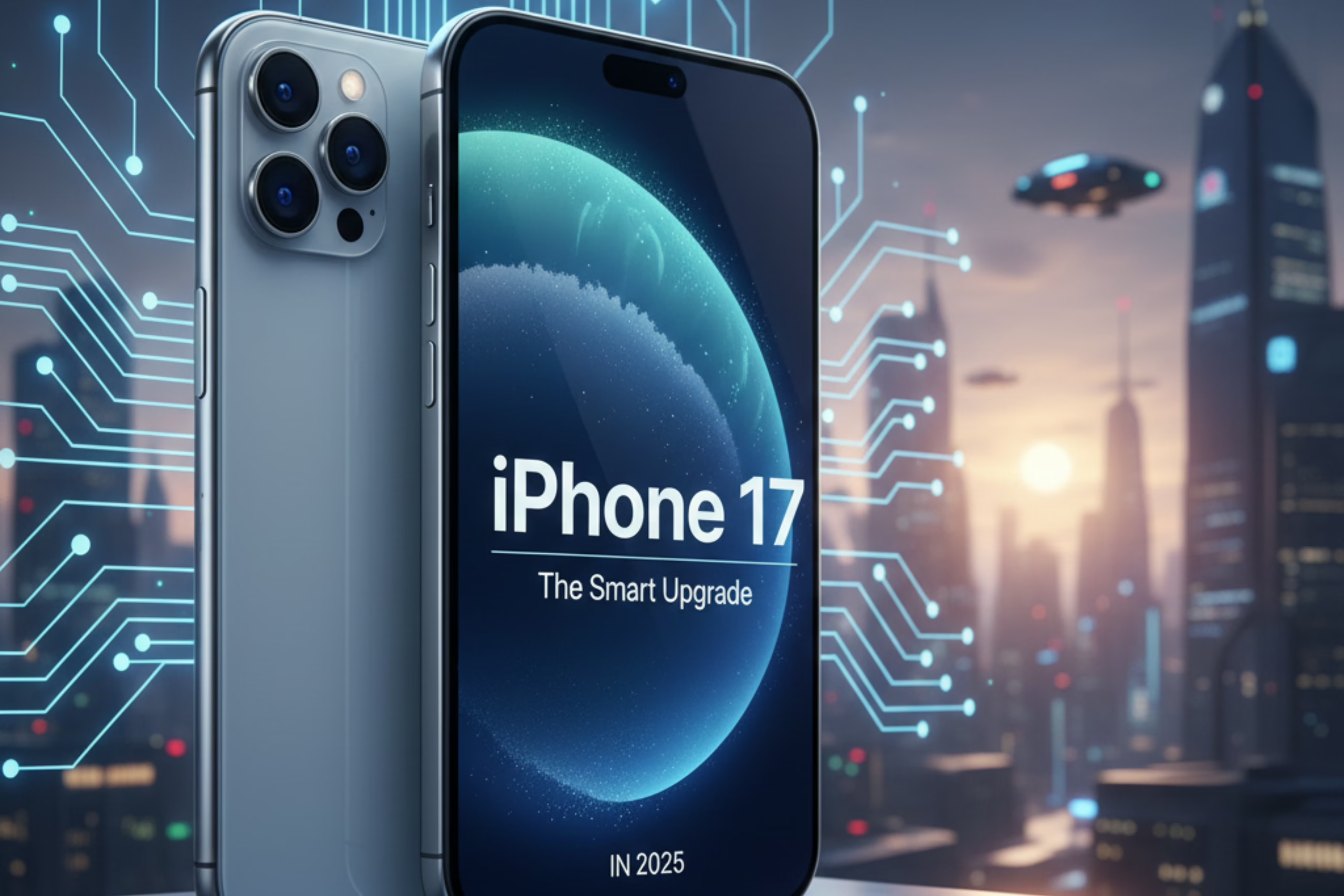
Apple’s latest standard flagship, the iPhone 17, marks a significant leap forward. With upgrades to the display, camera system, chip-set and storage, it’s the most compelling base-model iPhone in years. Australia’s launch begins on 19 September 2025 (pre-orders from 12 September) with local pricing starting at A$1,399 for 256 GB.
If you’re looking to upgrade from an older iPhone or switch brands, the iPhone 17 hits the sweet spot between price and performance.
Key Upgrades at a Glance
- Larger 6.3-inch Super Retina XDR OLED display with ProMotion up to 120 Hz refresh rate — previously reserved for “Pro” models.
- Apple’s A19 chip (built on the 3-nm process) for faster performance and better efficiency.
- Rear dual-lens camera system: both lenses are 48 MP (Wide + Ultra Wide), a big leap in image quality.
- New 18 MP front “Centre Stage” camera with a square sensor for landscape selfies and wider field of view.
- Better durability: Ceramic Shield 2 front glass with up to 3× better scratch resistance.
- Longer battery life, faster charging, and improved connectivity (Wi-Fi 7, Bluetooth 6, etc).
- Robust help for Australian users: from 5G bands to dual-eSIM support and strong trade-in offers.

Design & Display: Bigger, Better, Familiar
The iPhone 17 retains the familiar flat-edge aesthetic of recent iPhones, yet the screen has grown from 6.1″ to 6.3″ — matching the previous Pro models in size. Although it’s slightly larger and heavier than its predecessor, the gain in screen real-estate is instantly noticeable.
The display delivers silky-smooth motion thanks to ProMotion, and supports an Always-On mode, so you can glance at time and notifications without tapping. Peak brightness outdoors hits 3,000 nits, meaning better visibility in sunlight. With five colour finishes (Black, White, Mist Blue, Sage, Lavender), the visual appeal is strong.
If you prefer a lighter, ultra-thin option, the iPhone 17 Air is rumoured to deliver the same power in a slimmer profile — perfect for those who value portability.

Performance: Power Under the Hood
Powered by the A19 chip, the iPhone 17 offers fast processing and future-proof performance – including on-device AI tasks (thanks to Apple Intelligence support) and high-frame-rate gaming.
With 8 GB RAM in the base model and starting storage at 256 GB (doubling last year’s base tier), it sets a new floor for what a standard iPhone can offer.
Connectivity gets a boost via Apple’s new N1 networking chip (Wi-Fi 7, Thread support) and broader 5G compatibility. This pays dividends for Australians who travel or use mobile data heavily.

Camera System: Significant Upgrades
Rear Cameras
The dual-lens system now features two 48 MP sensors — one Wide (with 2× optical-equivalent zoom) and one Ultra Wide. The improvement in low-light, detail, and zoom versatility is marked.
Video recording steps up too: 4K 60fps, Dolby Vision HDR, plus dual capture (front + rear simultaneously) for creative use.
Front Camera
The front camera is now 18 MP with a square sensor (a first for iPhones) allowing landscape-mode selfies without rotating the device. It also supports Centre Stage, so it intelligently keeps you in frame during video calls.
Other Notables
- Photographic Styles, Night mode improvements, macro capability on Ultra Wide.
- Action button and Camera Control hardware features carry over from previous models but remain highly useful — especially for quick access to voice memos, magnifier, and camera functions.

Battery Life, Charging & Connectivity
Expect a full day of usage, even with heavier tasks. Apple claims up to 30 hours of video playback in the base iPhone 17 — a meaningful bump over prior models.
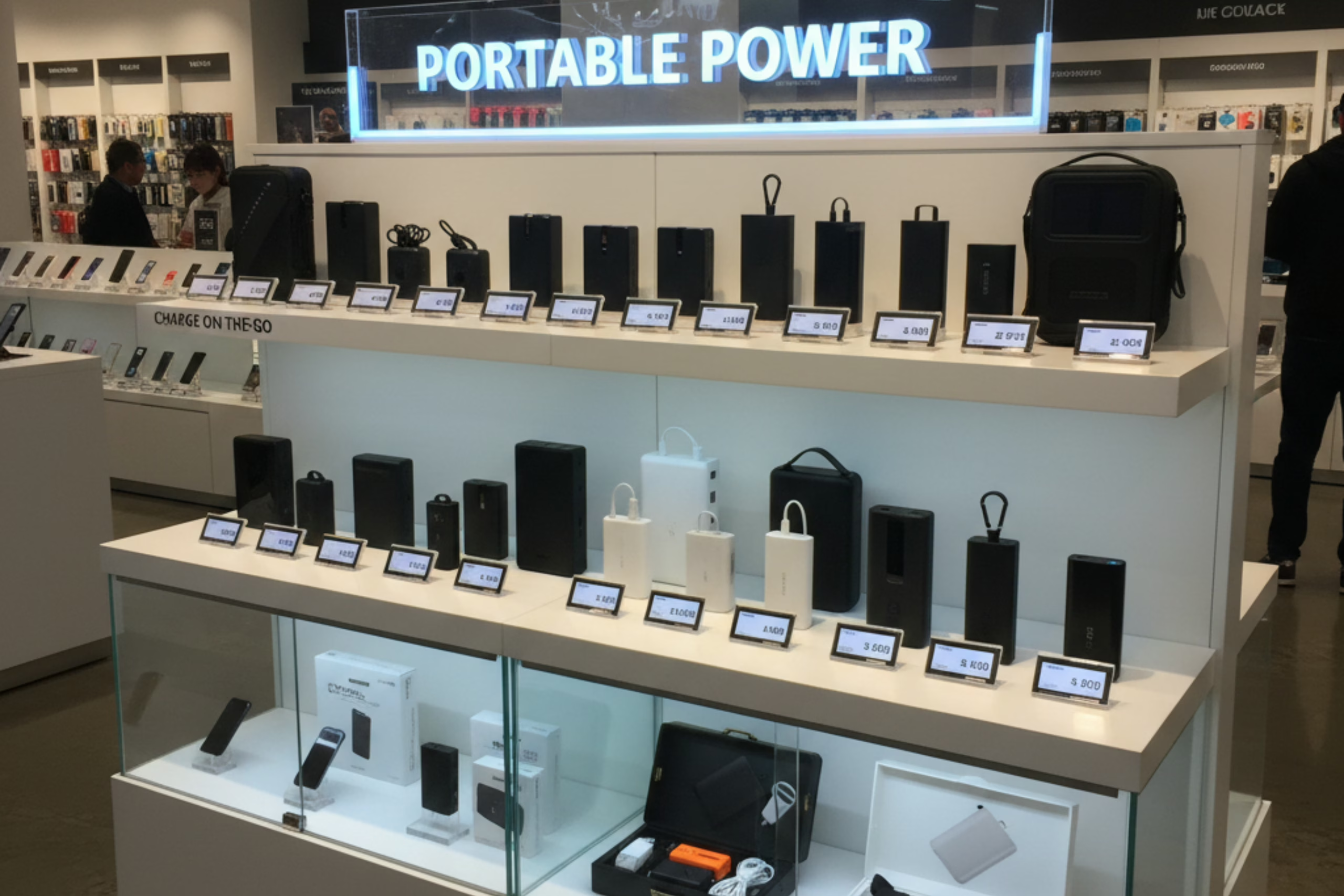
Charging is faster, with up to 50% in 20 minutes (with a compatible 40W or higher charger) and MagSafe / Qi2 wireless charging up to 25W. To maintain optimal charging performance, it’s important to know how to clean iPhone charging port safely without damaging your device.
On connectivity: the inclusion of Wi-Fi 7, Bluetooth 6, and Thread makes it not only future-ready, but ideal for smart-home setups and high-speed data users. Satellite-SOS and crash-detection features add a safety layer for Australian conditions.
Price, Availability & Australia Specifics
In Australia:
- Pre-orders begin: 12 September 2025
- Official launch in-store and via online: 19 September 2025
- Pricing starts at A$1,399 for 256 GB (iPhone 17). Higher storage options naturally cost more.
A quick comparison of Australian pricing for context:
- iPhone 17 (256 GB) — ~A$1,399
- iPhone 17 Pro and Pro Max step up significantly in cost and specs, so if your budget is focused on value the iPhone 17 is the sweet spot.
Should You Buy the iPhone 17?
Ideal for you if you:
- Are you upgrading from an older iPhone (iPhone 14 or earlier) and want a meaningful boost in display, camera and performance?
- Want “flagship features” (120 Hz display, better camera) but don’t need the ultra-premium price tag of Pro models.
- Live in Australia and want a device ready for the next few years of software updates, connectivity standards and resale value.
Maybe wait or choose differently if you:
- Already own an iPhone 16 or 16 Pro and are happy with its performance — the generational leap, while significant, may not justify the cost at this time.
- Need telephoto zoom beyond 2× or a vapour-chamber cooling system for heavy creative workflows — those are still Pro-only features.
- Want to save money and can use last year’s model: iPhone 16 can still serve very well at a discounted price.
Conclusion
The iPhone 17 marks a major shift for Apple’s standard-model lineup. With Pro-level display and camera upgrades landing in the base variant, it offers serious value for many users — especially in Australia where pricing is competitive.
If you’re still deciding whether the upgrade is worth it, our detailed iPhone 17 vs iPhone 16 comparison breaks down all the key differences in design, performance, and camera quality.
If your priority is “get a phone that lasts and delivers,” the iPhone 17 deserves a top spot on your shortlist. For power users who demand ultra-zoom, highest battery life or premium materials, the Pro/Max versions remain worth exploring — but for the majority, this is the sweet middle.